Salt spray is part of the Buzzards Bay lifestyle, but it can be tough on your home. If you have noticed rust on railings, peeling paint, or grit on windows after onshore winds, you are not alone. With a simple, seasonal plan, you can protect value, avoid surprise repairs, and keep your place looking its best year-round. Below is a Buzzards Bay-specific calendar you can follow, plus materials and local resources to make each task easier. Let’s dive in.
Why Buzzards Bay homes need a plan
Living near open water exposes your home to salt, wind, humidity, and storms that speed up wear compared with inland properties. The Buzzards Bay National Estuary Program tracks local climate and shoreline exposure that shape maintenance choices and flood risk, which is helpful context as you plan care routines (regional climate resources). If you are close to open water or in a mapped flood zone, you will want to confirm site-specific requirements before big projects using FEMA’s coastal flood tools (FEMA Coastal Flood Maps). Massachusetts also provides practical guidance on protecting coastal property and preparing for storms (Massachusetts coastal property guide).
Seasonal salt-air maintenance calendar
Spring: rinse, inspect, reset
- Give the entire exterior a low-pressure rinse to remove winter salt and grime. Focus on roof, siding, trim, and windows to limit corrosion and coating failure (salt-air roof care basics).
- Clean gutters and downspouts, then check seams and hangers for corrosion or pinholes. Salt-driven rust can lead to leaks when spring rains arrive (coastal roof and gutter tips).
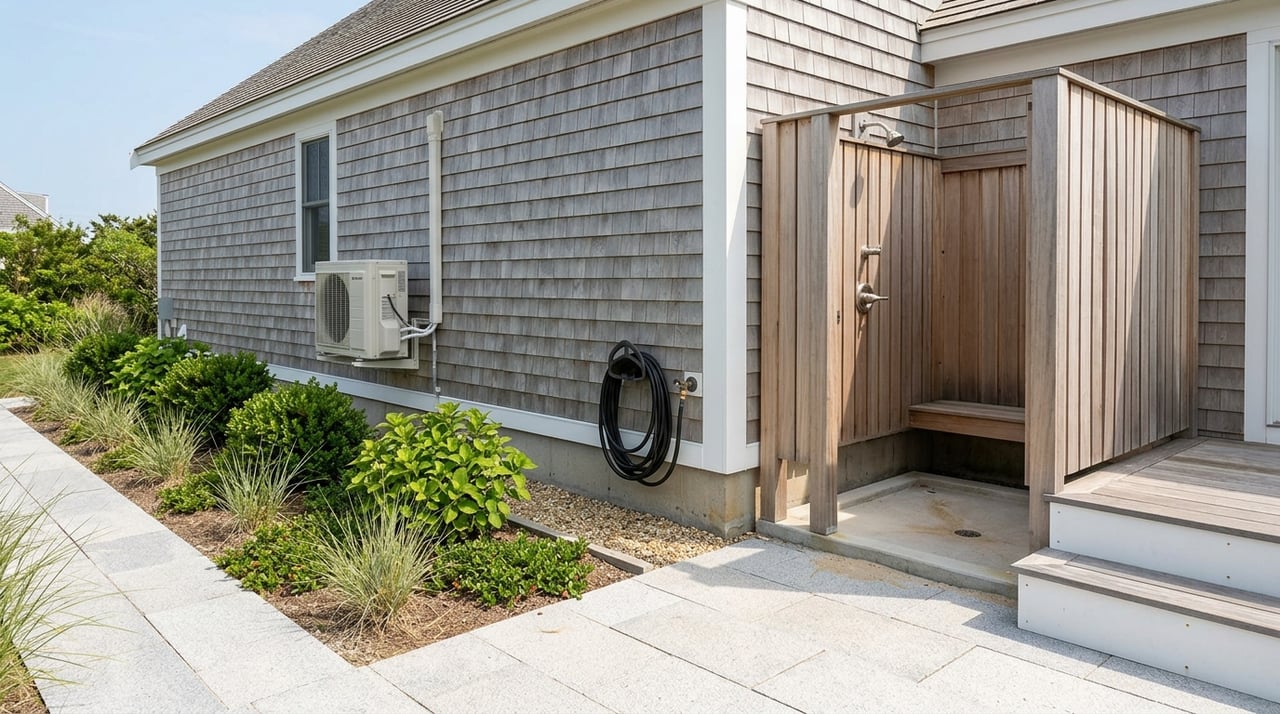
- Service HVAC before heavy use. Replace filters and have a pro clean outdoor coils so salt does not reduce cooling efficiency (coastal HVAC checklist).
- Inspect decks. Look for red rust on fasteners, joist hangers, and ledger attachments; replace corroded hardware. Near saltwater, stainless steel is the standard for safety (deck fastener guidance).
Summer: stay ahead of humidity and spray
- Rinse salt from windows, screens, railings, and high-exposure trim periodically. Add quick rinses after strong onshore winds to prevent pitting and staining (salt-air roof care basics).
- Swap HVAC filters monthly in peak season and visually check outdoor units for salt buildup (coastal HVAC checklist).
- Tackle small exterior paint touchups and caulking to block moisture before it seeps behind finishes (coastal paint care on the Cape).
- Check deck surfaces and recoat as needed. Coastal sun and salt are hard on horizontal wood; frequent care extends life.
Fall: storm-ready and sealed up
- Do a second full exterior rinse to remove summer salt before nor’easter season. This reduces corrosion on flashings, gutters, and fasteners (coastal roof and gutter tips).
- Store or secure outdoor furniture and protect exterior hardware. Winterize irrigation and any outdoor plumbing to prevent freeze damage (coastal home prep tips).
- Inspect roof flashing and attic ventilation, and service heating systems so they are ready for colder months.
- Recaulk windows and doors where seals show gaps or wear to keep out wind-driven rain (coastal paint care on the Cape).
Winter: monitor and respond
- Watch for ice dams and keep gutters clear when safe to do so. Corroded seams can fail under ice load and cause leaks (salt-air roof care basics).
- Check for interior moisture, condensation, or mold in high-humidity rooms; run dehumidifiers as needed (coastal home prep tips).
- After major coastal storms, inspect for structural movement, water intrusion, or flood indicators, and review state guidance for protective actions (Massachusetts coastal property guide).
Monthly and quarterly routines
- Scan visible metal railings, latches, hinges, and deck hardware for pitting or rust. Replace corroded parts promptly with marine-grade options; 316 stainless offers stronger resistance to saltwater pitting (316 stainless overview).
- Check HVAC filters monthly during heavy use and keep a clear zone around outdoor units for airflow (coastal HVAC checklist).
- Wipe salt film from entryways and glass after storms to protect finishes and keep grit out of interior spaces.
Choose materials that stand up to salt air
- Deck fasteners and connectors: Within about 300 feet of saltwater, stainless steel fasteners and connectors are recommended for decks. Inspect annually and replace any rusted components to avoid hidden failures (deck fastener guidance).
- Metals and coatings: Favor nonferrous or factory-coated metals and maintain touchups. If you must mix metals, use compatible fasteners and isolators to reduce galvanic corrosion (salt-air roof care basics).
- Roofs: Salt can accelerate corrosion on flashings and fasteners. Schedule at least a spring and fall low-pressure rinse and annual professional inspection to catch issues early (coastal roof and gutter tips).
- Paint and finishes: Expect faster chalking and peeling in salt air. Plan for regular touchups and use high-quality exterior coatings rated for coastal conditions (coastal paint care on the Cape).
Yard, drainage, and flood readiness
- Landscaping: Choose native, salt-tolerant plants that stabilize soils and handle wind exposure on the Upper Cape. Follow state guidance when planting near beaches or dunes (Massachusetts coastal plant lists).
- Drainage: Keep water moving away from the foundation with clear gutters, positive grading, and maintained dry wells where present. Good drainage reduces moisture stress on finishes.
- Flood planning: Confirm your FEMA flood zone and base flood elevation before renovating. Coastal zones can carry stricter standards for elevation and construction methods (FEMA Coastal Flood Maps).
- Waste and disposal: When you repaint or service equipment, dispose of old paints, solvents, and oils properly. Barnstable County hosts household hazardous waste events in Bourne and nearby towns (check dates on the county site).
Quick-reference checklist
- Check your flood zone and elevation requirements before projects so you plan correctly for coastal standards (FEMA Coastal Flood Maps).
- Rinse roof and exterior at least every spring and fall, with extra rinses after big onshore storms (salt-air roof care basics).
- Inspect and upgrade deck fasteners and connectors to stainless, and use 316 stainless where hardware is directly exposed to spray (deck fastener guidance; 316 stainless overview).
- Schedule annual HVAC service and keep up with monthly filter changes in peak season (coastal HVAC checklist).
- Use salt-tolerant native plants and maintain site drainage to protect your exterior and foundation (Massachusetts coastal plant lists).
- Dispose of paints and solvents through Barnstable County hazardous waste collection programs so you stay compliant and safe.
Plan around your home’s exposure
Homes within about 300 feet of open saltwater need stricter hardware and inspection routines, especially for decks and railings. Properties farther inland can still see heavy salt spray during onshore winds, which is why biannual rinsing and post-storm checks are smart across much of Bourne and Buzzards Bay. If you are unsure how your setting affects maintenance, start with a rinse and inspection schedule and adjust based on what you see over a season.
Ready to align your upkeep with your real estate goals, whether you plan to enjoy your home longer or prep for a future sale? For calm, knowledgeable guidance on timing, market prep, and next steps around Buzzards Bay, reach out to Shana Lundell for a conversation.
FAQs
What makes salt air around Buzzards Bay tough on homes?
- Salt, wind, and humidity speed corrosion and paint wear, so you need more frequent rinsing, inspections, and coastal-grade materials than inland homes.
How often should Buzzards Bay homeowners rinse roofs and siding?
- Plan for at least spring and fall rinses, and add quick rinses after strong onshore storms or if you are very close to open water.
Which deck hardware works best near saltwater in Buzzards Bay?
- Use stainless steel fasteners and connectors, and choose 316 stainless for parts directly exposed to spray for stronger resistance to pitting.
How do I check my Buzzards Bay flood zone before a project?
- Use FEMA’s coastal flood maps to find your zone and base flood elevation, then factor those standards into renovation plans.
What coastal plants handle salt and wind on the Upper Cape?
- Select native, salt-tolerant species recommended for Massachusetts coastal sites, and follow local guidance if you are near dunes or beaches.
Where can Bourne residents dispose of paint and solvents safely?
- Barnstable County runs household hazardous waste collection events; check the county schedule for Upper Cape dates before your project.